Movement reinforces strategy of people development, transfer of technical knowledge and consolidation of the company’s operational culture in the North American market
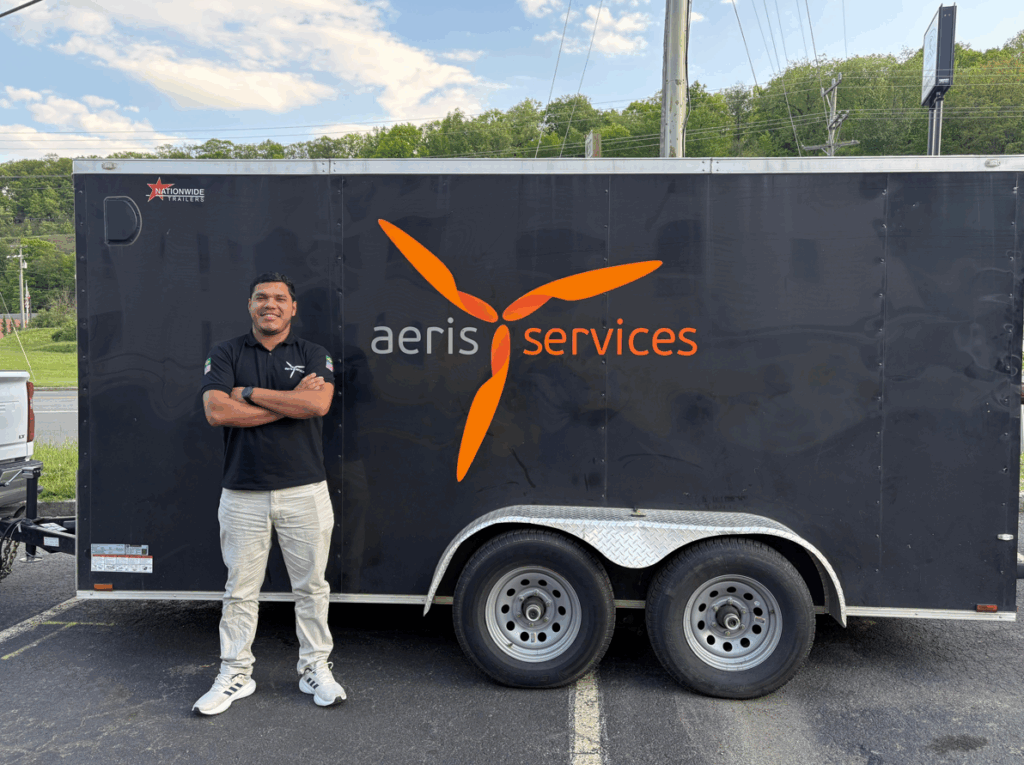
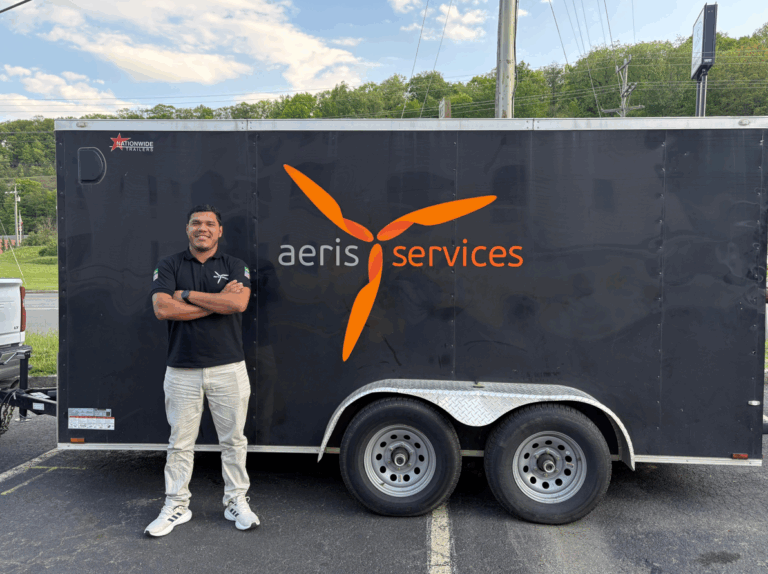
Aeris Energy celebrates the success in the expatriation of Brazilian professionals specialized in wind turbine blade repair and industrial rope access to work in the United States, in a move aligned with the strategy of strengthening the company’s international service operation. The company continues working on the process of transferring national employees to Aeris Services LLC, reinforcing the strategic role of internal technical training to support the expansion of operations in the North American market.
The expatriate professionals work in an activity considered highly specialized within the wind energy industry. The training process requires, on average, four years of internal technical development, involving training in complex wind turbine blade repairs, operational safety, work at height and industrial rope access. Before the expatriation is formalized, professionals go through a validation stage with the US consulate, which requires technical proof of specialization through internal certifications and a history of experience.
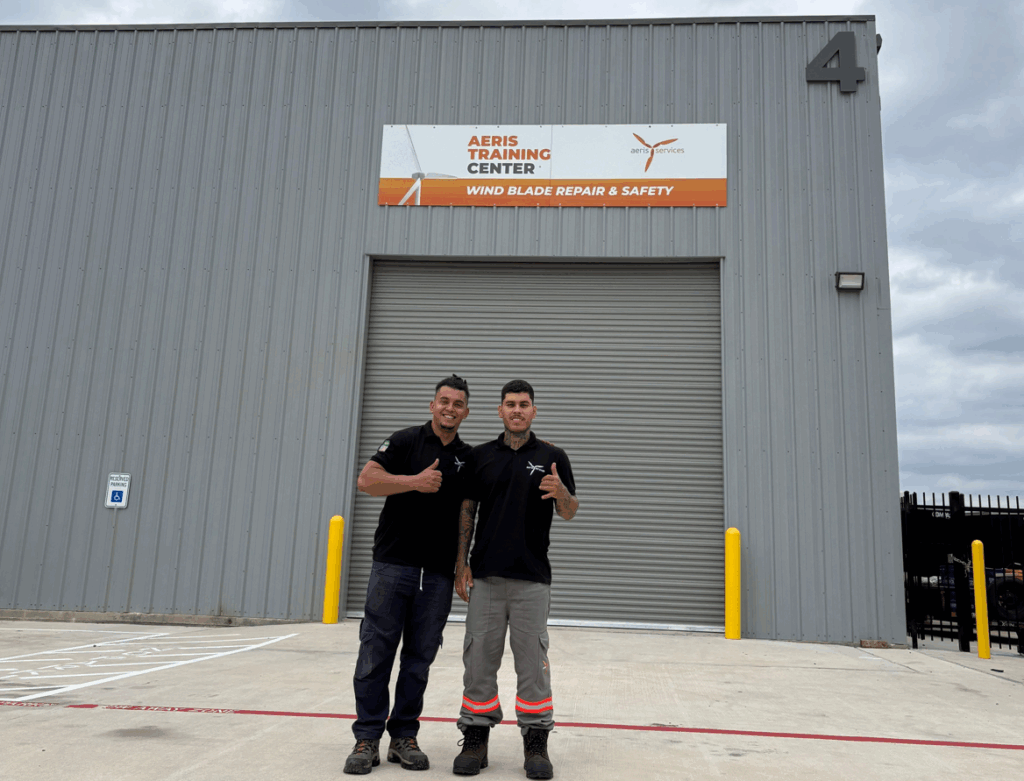
The company believes that this professional profile has become even more strategic given the scenario of low availability of qualified labor and high turnover in the international market for wind turbine services and maintenance. In the United States, Brazilian specialists also play a relevant role in disseminating Aeris’ operational culture, standardizing processes, and supporting the structuring of the local operation’s Training Center, recently inaugurated in Houston, Texas.
“The development of these people represents a direct investment in the sustainability of our international operation. They are professionals who bring technical knowledge, operational culture, execution discipline, and the ability to train new talent, which becomes especially relevant in a market facing growing workforce qualification challenges,” says Cassio Penna, vice president of operations at Aeris Services.
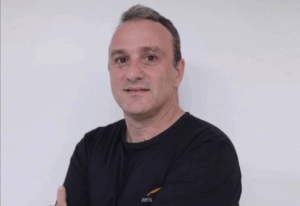
Among the expatriate professionals is Antônio Rodrigues, who started working in the North American operation after completing his international transition in April. “The experience built at Aeris prepares us to work in highly complex operations in any market,” he says.
Antônio Misael, also integrated into Aeris LLC, highlights the level of specialization required by the activity. “The sector demands increasingly qualified professionals, especially in technical services related to the maintenance and repair of blades,” he comments.
Also part of this movement, the trajectory of employee Renan da Silva Soares is pointed out internally as an example of the career development model built by Aeris. He joined the company in 2019 as a Production Assistant and, over the past few years, has progressed to increasingly specialized technical roles. In 2021, he joined the Services area as a Blade Repair Technician and later took on duties as an Industrial Rope Access Technician, working on complex repairs with a focus on safety, quality, and operational precision.
Now integrated into Aeris LLC’s operations, Renan will directly contribute to strengthening the company’s performance in the United States, supporting the transfer of technical knowledge and the consolidation of operational standards developed by the company in Latin America. “This move shows how specialized technical training has gained strategic relevance within the global wind energy industry,” he emphasizes.
The expatriation process was structured in three stages by the company. The first involves organizational preparation and alignment between leadership and technical areas. The second includes international transition, cultural integration, and knowledge sharing between teams. The third stage focuses on consolidating professional performance in the new operational context, defining responsibilities and monitoring adaptation.
For Aeris, the initiative also reinforces guidelines related to people development, operational quality, and value creation through the integration of strategy, culture, and technical capacity, pillars considered central to supporting the expansion of the company’s service operations in the international market.